
The disadvantages of a bridging loan are easy to overlook when you are under pressure to move quickly on a property deal. Bridging finance can unlock opportunities that a standard mortgage never could — but the same speed and flexibility that make it attractive also carry serious financial exposure if things do not go to plan.
Before you commit to short-term borrowing of this kind, it pays to understand the full picture. Below, we break down every major drawback in plain terms so you can make a properly informed decision.
Bridging loan costs are significantly higher than a mortgage
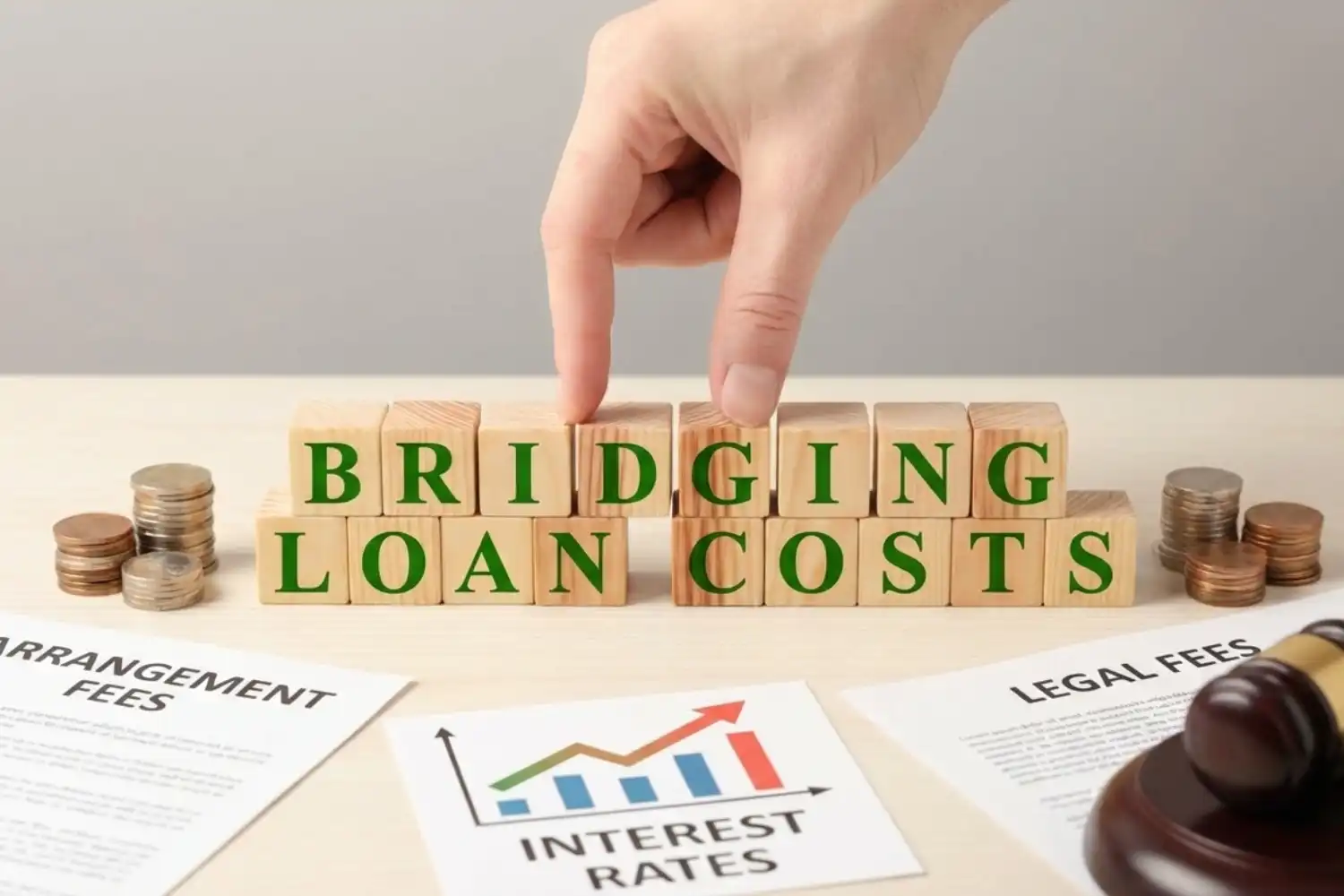
One of the biggest disadvantages of a bridging loan is the cost. Unlike a residential mortgage where interest is quoted as an annual percentage, bridging loan interest is typically charged monthly — and those rates can range from 0.5% to well over 1.5% per month. That translates to an effective annual rate that can exceed 20%, which is far beyond what you would pay on conventional property finance.
On top of interest, borrowers face a range of one-off charges. Understanding these bridging loan costs in detail before signing is essential, because they add up quickly and can catch borrowers off guard. Typical fees include:
- Arrangement fee: usually 1–2% of the loan amount, payable upfront or deducted from the advance
- Valuation fee: required by most lenders before they will offer terms
- Legal fees: both you and the lender need separate legal representation
- Exit fee: some lenders charge this at repayment, adding further expense at the end of the term
- Administration fee: covers the lender’s processing costs
To put this into context, borrowing £150,000 at 1% per month over six months, with a 2% arrangement fee and typical professional fees, could cost you well above £15,000 in total charges. That is money that needs to be factored into your project from day one.
Your property is at risk if you cannot repay on time
Bridging loans are secured against property. That security gives lenders the confidence to move quickly and lend large sums — but it also means the stakes are extremely high for you as the borrower.
If you are unable to repay within the agreed term, the lender has the legal right to repossess and sell the secured asset to recover what it is owed. Should the sale price fall short of the outstanding balance, the lender can pursue you personally for the difference — particularly where a personal guarantee was provided.
Understanding the full range of bridging loan risks around repossession is vital. Many borrowers focus so heavily on completing a deal that they underestimate how quickly a delayed sale or stalled remortgage can push them into default.
Short repayment terms create serious pressure
Bridging loans are designed as a short-term solution, with most terms running between one month and 24 months. That brevity is precisely what makes them useful in time-sensitive situations — but it is also one of their most significant disadvantages of a bridging loan.
When you are relying on a property sale to repay the loan, you are at the mercy of buyer chains, conveyancing delays, mortgage valuations, and survey issues — all of which are entirely outside your control. If your sale falls through, or completion is delayed by even a few weeks, you may find yourself in breach of your loan agreement.
Extending the term is often possible, but it is rarely free. Most lenders charge additional arrangement fees and apply higher interest rates for any extension period, meaning the bridging loan costs you originally planned for can increase substantially.
An exit strategy is not optional — it is essential
Every bridging loan requires a credible exit strategy: a clear, demonstrable plan for how you will repay the facility at the end of the term. Common exit routes include selling the secured property, refinancing onto a buy-to-let mortgage, or completing a development and refinancing onto a term loan.
The problem is that life rarely follows a script. Property markets shift, planning permissions get delayed, buyers pull out, and remortgage offers fall through. If your exit strategy fails — even partially — you are left exposed.
This is one of the bridging loan risks that professionals in the industry take most seriously. Without a robust backup plan, borrowers can find themselves trapped with a loan they cannot repay and a lender who is actively pursuing possession of their asset.
Variable interest rates make budgeting unpredictable
Not all bridging loans carry fixed interest rates. Some products are offered on a variable basis, meaning the rate — and therefore your monthly interest charge — can change during the loan term. For borrowers who are already managing tight cash flow, this unpredictability can be a significant problem.
Even where the rate is fixed, lenders typically charge interest daily rather than monthly. This means that every extra day you hold the loan costs you money, and delays you did not plan for can erode project margins very quickly.
Reviewing the bridging loan interest rates available in the current market — and understanding exactly how your lender calculates and compounds interest — is an essential step before proceeding.
Not sure whether a bridging loan is the right option at all?
Speak with a solicitor before committing. We can review your loan terms, assess your exit strategy, and help you decide whether a safer or cheaper finance option may be available. Get independent legal guidance
Unregulated loans offer limited consumer protection
Bridging finance in the UK is split between regulated and unregulated products. Regulated bridging loans — those secured against a borrower’s primary residence — are overseen by the Financial Conduct Authority (FCA) and provide a layer of consumer protection if things go wrong. Unregulated loans — often used for commercial, investment, or development purposes — carry none of those safeguards.
For unregulated borrowers, there is no Financial Ombudsman Service route and limited recourse if a lender behaves unfairly or sells an unsuitable product. This absence of oversight is one of the more underappreciated disadvantages of a bridging loan in a commercial context.
The risk of negative equity
Property values do not always move in the direction borrowers expect. If the market dips during your loan term — or a valuation comes in below your expectations at refinance — you could find yourself in negative equity, where the outstanding loan exceeds the value of the secured property.
This scenario significantly restricts your options. Remortgaging onto a standard product becomes difficult or impossible, forced sale may not clear the debt, and the lender may become increasingly aggressive in pursuing repayment.
The bridging loan risks around market fluctuations are particularly acute for developers and investors who are relying on enhanced GDV (gross development value) figures to justify the original borrowing.
Defaulting can have severe and lasting consequences
If a borrower goes into default — whether through missed interest payments or failure to repay at the end of the term — the consequences go well beyond losing the secured property.
Default interest rates are typically higher than the standard rate, meaning debt escalates quickly. A default entry on your credit file can affect your ability to borrow for years. Where a personal guarantee is in place, the lender can pursue your personal assets. And in cases where the loan is held in a company structure, directors may face personal liability if the guarantee was given in their own name.
When does a bridging loan make sense despite the risks?
It is worth acknowledging that bridging finance remains a genuinely useful tool in the right circumstances. Property investors who understand the market, developers with proven track records, and buyers who need to act within a 28-day auction deadline may all find that the advantages of speed and flexibility justify the premium costs.
The key distinction is preparation. Borrowers who enter into bridging finance with a watertight exit strategy, realistic cost projections, contingency budgets, and experienced legal support are far better placed to manage the risks than those who treat it as a quick fix.
Are there better alternatives?
Before committing to bridging finance, it is always worth considering whether a different product might serve your needs more safely. Depending on your circumstances, there may be more cost-effective options available — and exploring the full range of alternatives to a bridging loan can save you significant money and stress.
Options worth exploring include remortgaging your existing property to release equity, applying for a term development loan if your project timeline allows it, or in some cases simply waiting for your current property to sell before proceeding with a purchase.
Get legal advice before you commit
The disadvantages of a bridging loan are real and, in some cases, serious. High bridging loan costs, short repayment windows, repossession risk, and limited protection on unregulated products all demand careful consideration.
Working with experienced bridging loan solicitors before you sign anything can make a material difference. A specialist solicitor will review the loan agreement in full, ensure you understand every condition and fee, and advise on whether the terms you have been offered are fair and appropriate for your situation.
If you are weighing up whether a bridging loan is the right move, or you have already received a loan offer and need a second opinion on the legal terms, Bridging Loan Lawyers can help. We act exclusively for borrowers and offer a free initial consultation — contact us today to speak with a specialist.
Concerned about the risks or hidden costs of a bridging loan?
Before you sign any loan agreement, speak with a specialist bridging loan solicitor. We review the legal terms, explain the real repayment risks, and help you confirm whether your exit strategy is strong enough to proceed safely.