
A cheaper alternative to a bridging loan does exist — and in many situations, choosing one could save you thousands of pounds in interest and fees. Bridging loans are powerful tools for speed, but their costs are significant. Before committing to short-term property finance, it is worth understanding what other options are available and whether one of them might suit your circumstances better.
In this guide, we walk through the most practical alternatives, explain when each one makes sense, and highlight the key differences you need to be aware of.
What makes bridging loans expensive?
Bridging loans are short-term loans secured against property, typically arranged for between one month and 24 months. Because they are designed for speed and flexibility, lenders take on greater risk — and they price their products accordingly. Interest is usually charged monthly rather than annually, and rates typically range from 0.5% to 1.5% per month. When you translate that into annual equivalent rates, the true cost becomes much clearer.
On top of interest, you will usually pay arrangement fees of 1–2% of the loan amount, valuation fees, legal fees, and sometimes an exit fee. For a £90,000 loan over three months, those charges can easily add up to £8,000 or more — before any complications arise.
If your transaction is time-sensitive, that cost can be justified. But if you have a little more flexibility, a cheaper alternative to a bridging loan could offer a far better outcome. Our article on bridging loan interest rates in 2026 provides a detailed breakdown of what you can currently expect to pay.
The most common cheaper alternatives to a bridging loan
Not every situation calls for bridging finance. Below are the bridging loan alternatives most commonly used in the UK property market, along with the circumstances in which each one works well.
Remortgaging to release equity
Remortgaging is one of the most widely used bridging loan alternatives for homeowners who already have equity built up in their property. The process involves either switching to a new mortgage lender or renegotiating terms with your existing one, releasing a lump sum of capital in the process.
The main appeal is cost. Because a remortgage is a long-term, first-charge product secured over a full property, lenders view it as relatively low risk — which means interest rates are significantly lower than those on bridging loans. Monthly repayments are spread over years rather than months, reducing the financial pressure considerably.
The drawback is speed. A remortgage typically takes several weeks to arrange, involving valuations, affordability assessments, and solicitor work. If your timeline is tight, this may rule it out. However, if you have time to plan ahead, remortgaging is often the most cost-effective cheaper alternative to a bridging loan for accessing property equity. Those using remortgaging as an exit from an existing bridge should also read our guide on remortgaging after bridging loans.
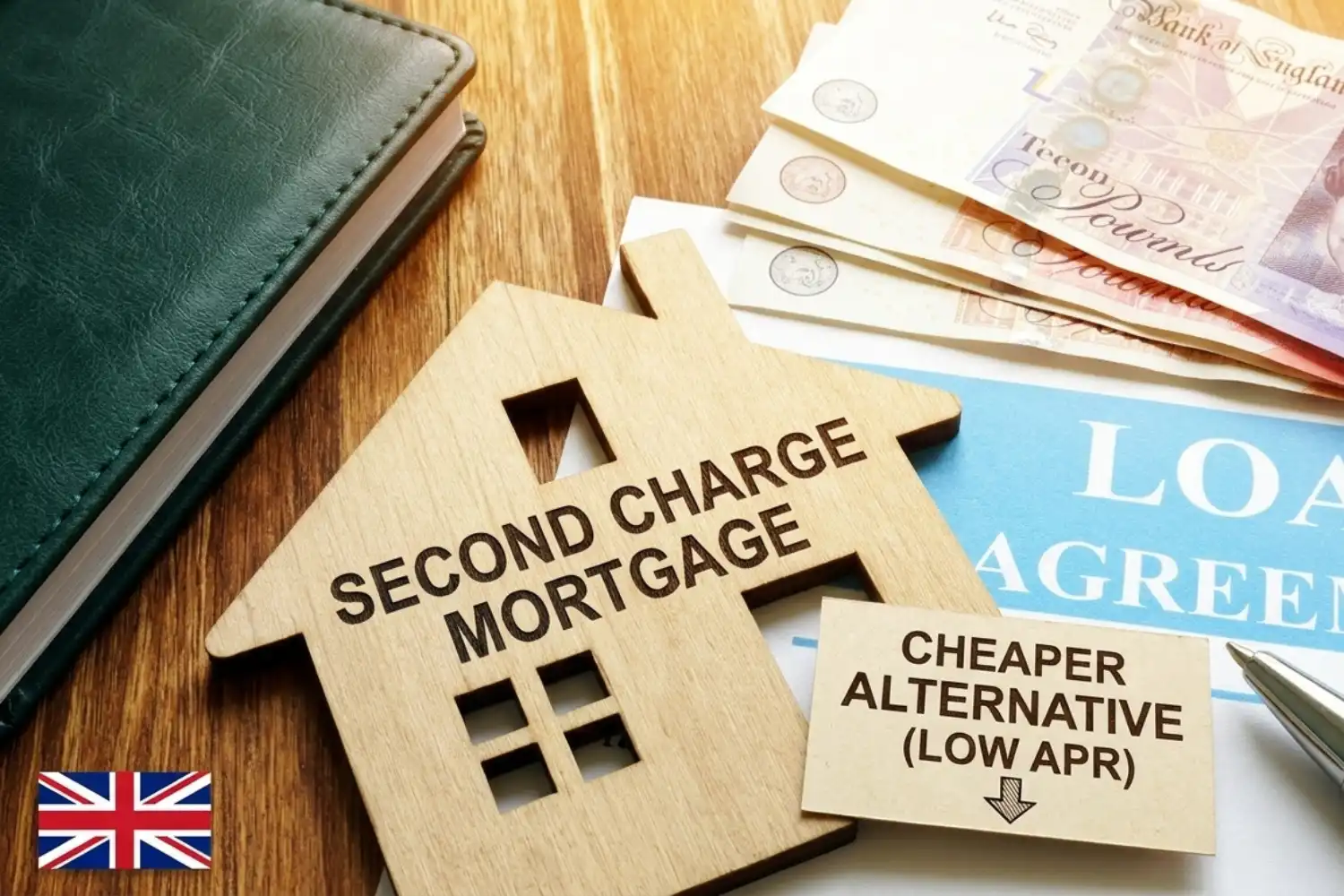
Second-charge mortgage (secured loan)
A second-charge mortgage — sometimes called a secured loan or homeowner loan — allows you to borrow against the equity in your property without disturbing your existing mortgage. The loan sits behind your primary mortgage in terms of priority, which is why it is described as ‘second charge’.
Because the loan is secured against your home, lenders can offer lower interest rates than unsecured borrowing, and larger amounts than personal loans. Repayments are made monthly over a fixed term, making budgeting straightforward.
This type of short-term property finance works particularly well when your existing mortgage has favourable terms that you do not want to disturb, or when you want to fund renovations without touching your primary mortgage arrangement. It is one of the strongest like-for-like bridging loan alternatives for borrowers who need access to a meaningful sum but are not in a rush.
Personal loan
For smaller amounts — typically up to around £25,000 to £40,000 — an unsecured personal loan can be a straightforward cheaper alternative to a bridging loan. There is no property tied as collateral, the application process is simpler, and funds can sometimes arrive within days.
The downside is that personal loan interest rates are usually higher than secured products, and borrowers with a weaker credit history will be offered less favourable terms. They are also unsuitable for larger property purchases where six-figure sums are required.
Where personal loans earn their place is in lower-cost renovation projects or situations where you need a relatively modest amount quickly and do not want to use your property as security. For the right borrower, this can be a genuinely cost-effective piece of short-term property finance.
Buy-to-let mortgage
If you are a property investor looking to purchase a rental property that is already in a habitable condition, a buy-to-let mortgage is frequently a cheaper long-term solution than bridging finance. Repayment terms are longer, interest rates are lower, and the rental income from the property can cover the monthly repayments.
The limitation, however, is that buy-to-let mortgages cannot usually be used on properties that require significant renovation before they can be let — which is often the very reason an investor considers bridging finance in the first place. If the property is already lettable, a BTL mortgage is worth exploring as a primary alternative to bridging.
Development finance
For property developers undertaking substantial renovation or build projects, development finance may offer a more tailored and competitive solution than general bridging. Unlike a bridging loan, which is calculated against the current value of a property, development finance is assessed against the projected Gross Development Value (GDV) — the estimated value of the property once works are complete.
Funds are typically released in staged drawdowns as the project progresses, which reduces the total interest accrued at any given point. While development finance can still be expensive for large-scale projects, it is structured more efficiently for that type of work than a standard bridge.
Equity release (lifetime mortgage)
For homeowners aged 55 and over, equity release products such as lifetime mortgages can provide access to a lump sum without monthly repayments. The loan is repaid when the property is eventually sold — either when the owner moves into long-term care or passes away.
This is not a fast-access product, and it is not suitable for short-term property investment purposes. However, for older homeowners who need to fund renovations, consolidate debt, or cover other significant costs without a bridging loan, equity release can be a far lower-cost solution in the long run — provided the implications for their estate are fully understood.
Borrowing from family or using savings
It may not always feel like a finance product, but using personal savings or borrowing informally from family is often the most cost-effective solution of all — zero interest, no arrangement fees, and no exit penalties. Many borrowers overlook this option because they prefer to preserve their savings, but in practice, the interest saved by not taking out a bridging loan often outweighs the return those savings would generate sitting in a bank account.
If borrowing from family, it is important to treat the arrangement professionally — document the terms, agree a clear repayment plan, and consider having a solicitor formalise the agreement to protect both parties. Clarity from the outset prevents misunderstandings later.

Trying to decide between a bridging loan and another funding option?
The right choice depends on your timeline, equity position, and exit strategy. Speak with a solicitor before committing to make sure the structure you choose is legally and financially appropriate. Get independent guidance
When a bridging loan is still the right answer
Despite the higher costs, there are genuine situations where bridging finance remains the most appropriate option — and where no cheaper alternative to a bridging loan would actually get the deal done.
Auction purchases are the clearest example. When you buy at auction, you typically have 28 days to complete. A mortgage or remortgage cannot be arranged in that timeframe; a bridging loan can. Similarly, if a property chain has broken and you need to move quickly to avoid losing a purchase, a bridge provides the immediacy that no other product can match.
Properties in poor condition also present a challenge for conventional lenders. Many mortgages and secured loan products require a property to be in a habitable condition. If you are purchasing something uninhabitable and plan to renovate before refinancing, a bridging loan or specialist refurbishment product may be your only viable option.
For a full picture of when bridging finance is and is not appropriate, our guide on who a bridging loan is best for covers the key use cases in detail.
How to decide which option is right for you
There is no universal answer to whether a cheaper alternative to a bridging loan is the right choice — it depends entirely on your timeline, the property involved, the amount you need, and your exit strategy. The best starting point is to work through each option with a finance broker or specialist adviser who can assess your individual circumstances.
What is clear, however, is that the decision should never be made on speed alone. The cost difference between a bridging loan and a lower-rate alternative can be substantial, and taking a few extra days to explore your options properly is almost always worthwhile.
Understanding the costs involved is an important first step, and our article on bridging loan costs and fees gives you a clear picture of what you are comparing against.
Frequently asked questions
What is the cheapest alternative to a bridging loan?
For most borrowers, remortgaging or using personal savings will be the cheapest option — both avoid the high monthly interest rates associated with short-term property finance. A second-charge mortgage can also offer significantly lower rates than a bridge for those who need to borrow a larger amount over a longer period.
Can I use a personal loan instead of a bridging loan?
You can use a personal loan for smaller amounts, typically up to £25,000–£40,000. For larger property purchases or development projects, a personal loan will not provide enough capital, and a secured product will be necessary.
Are bridging loan alternatives harder to arrange?
Most bridging loan alternatives take longer to arrange than a bridge, which is part of the trade-off. Remortgages, buy-to-let mortgages, and second-charge products all involve more extensive underwriting. If speed is your primary concern, that will limit your options.
Do I still need a solicitor if I use a bridging loan alternative?
Yes. Any form of secured lending against property requires legal input. A solicitor will need to review the loan agreement, register any charge against the property, conduct the necessary searches, and ensure the transaction is legally sound. This applies whether you are taking a bridging loan or a cheaper alternative. Understanding the role of legal support in secured borrowing is covered in more detail in our guide on whether you need a solicitor for a bridging loan.
Further reading
For a comprehensive overview of how bridging finance compares to longer-term mortgage products, the Money Saving Expert guide to bridging loans provides useful background reading.
Not sure which option is actually cheaper for your situation?
Bridging loans are not always the most cost-effective route. A solicitor can review your proposed finance structure, check the legal terms, and help you confirm whether remortgaging, development finance, or another alternative would be safer and more suitable.