
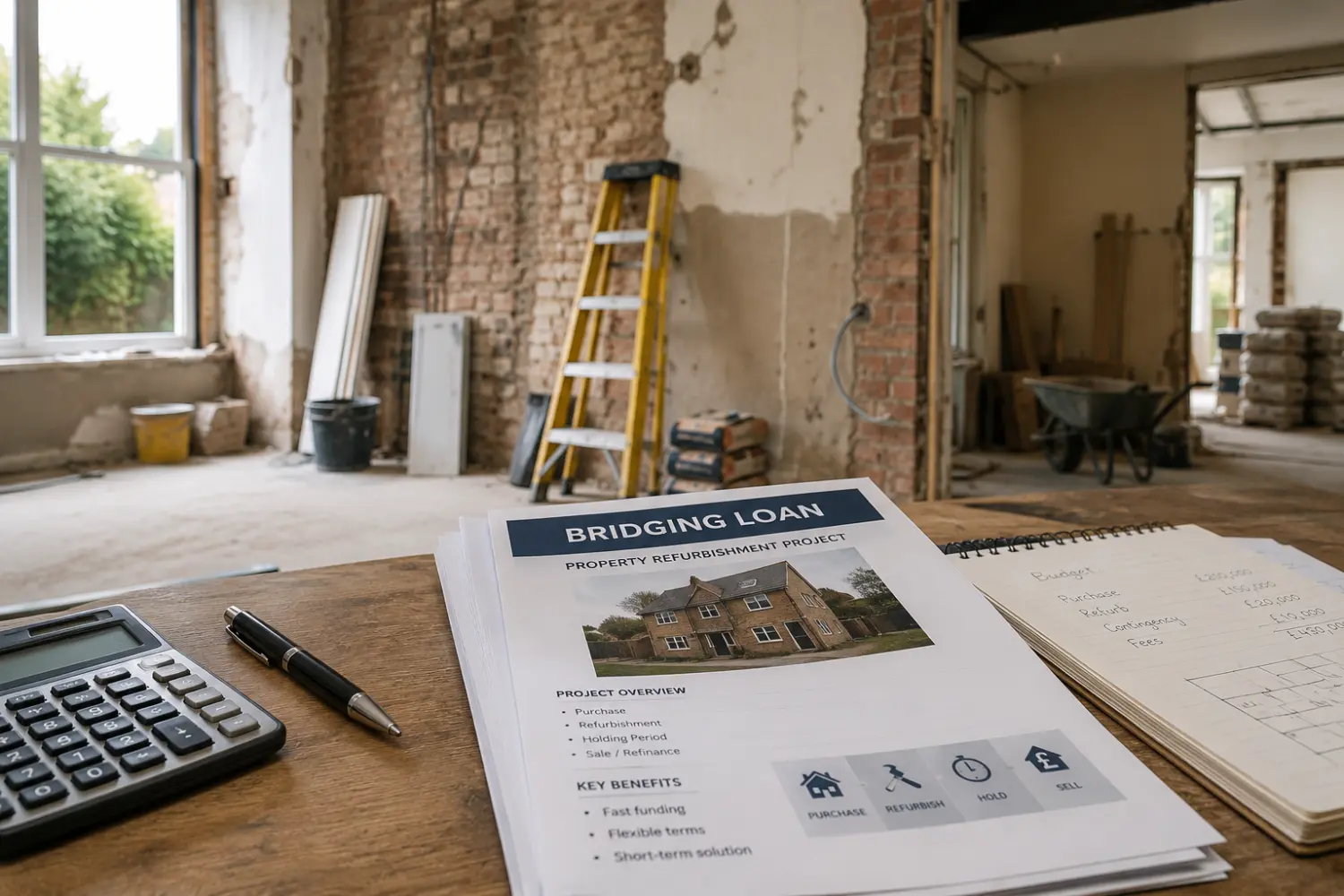
A bridging loan for property refurbishment can be the difference between a stalled project and a finished one that’s ready to sell or let. This type of short-term finance gives landlords, developers and investors fast access to funds for renovation work, without waiting months for a traditional mortgage to complete.
If you’re new to this kind of borrowing, it helps to understand how a refurbishment bridging loan is structured, what lenders expect, and why having the right legal support in place from the start protects your project and your money. This guide walks through the whole process, from eligibility through to repayment, so you know what to expect before you make an enquiry.
What is a bridging loan for property refurbishment?
A bridging loan for property refurbishment is a short-term loan secured against a property, used specifically to fund renovation or improvement work. Unlike a standard mortgage, it’s designed for speed rather than longevity, often completing within days or weeks rather than months.
Lenders usually base the loan on the property’s current value and its expected value once work is finished, known as the gross development value. That gives borrowers access to more funding upfront, which is useful when cash flow is tight during a renovation.
These loans are commonly used by landlords upgrading a rental property, developers adding value before a resale, and homeowners restoring a property that a standard mortgage lender wouldn’t touch in its current condition.
Light refurbishment vs heavy refurbishment — what’s the difference?
Not all refurbishment projects look the same, and lenders split them into two broad categories. Knowing which one applies to your project affects the loan terms, the paperwork, and how quickly funds are released.Light refurbishment
A light refurbishment covers cosmetic work that doesn’t need planning permission or building regulations approval. New kitchens, bathrooms, flooring, redecoration and general repairs all fall into this category. A refurbishment bridging loan for light works is usually simpler to arrange, since there’s less for the lender’s surveyor to assess.Heavy refurbishment
A heavy refurbishment involves structural changes, such as extensions, loft conversions, or converting a property into multiple units. These projects often need planning permission, and lenders will look more closely at your contractor’s experience, the build costs, and the timeline before releasing a refurbishment bridging loan for this kind of work. Some lenders are simply more comfortable with heavier schemes than others, so it’s worth checking a lender’s track record with similar projects before you commit to an application.How does a refurbishment bridging loan work in practice?
The process for a refurbishment bridging loan follows a fairly consistent pattern, whether you’re doing up a single flat or converting a larger building into several units.
- Initial enquiry, where you set out the project, budget and expected timeline
- Property valuation, based on both current condition and projected value after work
- Legal due diligence, carried out by your solicitor alongside the lender’s own checks
- Offer and completion, once terms are agreed and documents are signed
- Staged drawdowns, where funds are released in instalments as work progresses on larger projects
That staged drawdown structure is one of the main differences between a refurbishment bridging loan and a standard bridging loan used only for a purchase. Lenders want assurance that money is being spent on the works it was intended for, so a surveyor will often check progress before each stage is released.

Do you need a bridging loan solicitor for a refurbishment project?
Yes. A bridging loan for property refurbishment carries legal risks that a standard property purchase doesn’t, from planning conditions to staged payment terms, and a bridging loan solicitor isn’t an optional extra, it’s a requirement most lenders insist on before releasing funds.
Your bridging loan solicitor will typically handle:
- Reviewing the loan agreement and explaining any unusual terms
- Carrying out property searches and checking for restrictions
- Registering the legal charge with the Land Registry
- Liaising with the lender over staged drawdown conditions
- Managing the secure transfer of funds at each stage
Because refurbishment loans often involve the bridging loan valuation process running alongside the build itself, your solicitor also acts as the point of contact between you, the lender and the surveyor, keeping the legal side moving in step with the building work.
Not sure if your refurbishment project qualifies for bridging finance?
Every lender has different criteria, and refurbishment projects are assessed on more than just the numbers. Talk to our bridging loan solicitors before you approach a lender, and we'll help you understand what's realistic for your project and timeline.
Costs and fees you should budget for
A refurbishment bridging loan typically costs more than a standard mortgage, reflecting the short-term nature and faster turnaround. Because the loan is often based on the property’s projected value after work, rather than just its current value, the fee structure can look a little different to a standard purchase loan. Budgeting properly from the outset avoids surprises partway through the project.
- Arrangement fees, usually 1-2% of the loan amount
- Valuation fees, covering the surveyor’s assessment of current and projected value
- Legal fees, covering both your solicitor and the lender’s solicitor
- Monthly or rolled-up interest, depending on how the loan is structured
- Exit fees, charged by some lenders on early repayment
It’s worth asking your bridging loan solicitor to confirm exactly which fees apply to your refurbishment bridging loan before you sign anything, since some costs are negotiable and others aren’t.
Broker or direct lender — which route suits a refurbishment project?
Some borrowers approach lenders directly, while others prefer a broker who can compare options across the market. For refurbishment projects specifically, a broker’s familiarity with which lenders are comfortable with heavier works can save time and prevent a wasted application. Our guide on choosing a broker or a direct lender breaks down the pros and cons of each route in more detail, including when it’s worth paying a broker fee and when going direct might work out cheaper overall.
Planning your exit strategy for a refurbishment bridging loan
Every refurbishment bridging loan needs a credible exit strategy, agreed before the loan completes. Lenders want to see exactly how you intend to repay the loan once the work is finished, and a weak exit strategy is one of the most common reasons an application is declined.
- Selling the property once refurbishment is complete
- Refinancing onto a standard buy-to-let or residential mortgage
- Using rental income to support a refinance application
- Repaying from a separate source, such as another property sale
Our detailed guide on how lenders assess your bridging loan exit strategy explains what lenders look for and how to strengthen your application before you apply, including the evidence most lenders expect to see.

What documents will you need to apply?
Lenders move quickly on refurbishment bridging loans, but only once they have everything they need. Getting your paperwork ready early, including proof of funds, a detailed schedule of works, contractor quotes and your exit strategy, speeds up the whole process considerably. Our bridging loan documents checklist covers exactly what to prepare before you apply, so there’s no last-minute scramble once a lender is ready to move, and your solicitor can start their checks without delay.
Ready to talk to a bridging loan solicitor about your refurbishment project?
Whether you're planning a light cosmetic update or a full structural renovation, getting a bridging loan for property refurbishment right starts with the right legal advice. Our bridging loan solicitors act exclusively for borrowers, so our advice is always on your side, not the lender's.